What Is Bok Choy Good For?
Author: admin | Category: Food Facts
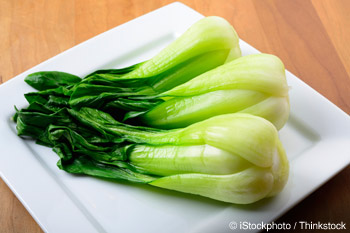 Cultivated in China for centuries, bok choy has played a large part not only in its cuisine, but in traditional Chinese medicine. Today, it’s a staple in both Asian and American recipes.
A deep green leafy vegetable that resembles Romaine lettuce on top and a large celery on the bottom, bok choy is a crucifer more closely related to cabbage. The entire vegetable can be used…
01 May 2015
 Native to southern Ecuador and northern Peru, where it still grows uncultivated, the tropical fruit cherimoya is unheard of by many Americans, since it has somewhat finicky growing preferences. Cherimoya trees don’t fare well in extreme temperatures, nor do they grow in tropical lowlands or at very high altitudes.
 A crunchy snack all by itself or with peanut butter added to round out the nutrients, celery is one of the most versatile vegetables in the garden, useful for its flavorful seeds and pale green leaves and stalks. It’s a direct descendant of wild celery and a member of the Apiaceae family with parsnips, fennel, and parsley,
 Cauliflower is one of many crucifers, including broccoli, cabbage, and kale, and is named for its cross-shaped stems. White, purple, green, or pale orange in color, it’s one of those amazingly versatile veggies that shows up raw on relish plates, sautéed in stir fries, pickled with baby onions, roasted on shish kabobs, and even processed to resemble mashed potatoes. It’s a good mixer with other cooked vegetables, such as carrots and broccoli.
 Native to Brazil, cashews are crescent-shaped nuts with a sweet flavor and a plethora of uses in the kitchen. Considered third in consumption among all the tree nuts in the world, they’re great when mixed with raisins, dried cranberries, shredded coconut,
 Extremely versatile to eat and available nearly anywhere in the world, carrots have been around for centuries. Historians believe that carrots were cultivated by the Ancient Greeks and Romans, as they were mentioned by Pliny the Elder and prized by Emperor Tiberius.
 Up until the 19th century, most of the world was supplied with cardamom from the area where it originated: tropical parts of India, Nepal, and South Asia. This spice has been traded in those regions for over a thousand years, but today, it’s grown commercially in areas like Guatemala, New Guinea, and Vietnam, which indicates the type of climate it requires.
 “Succulent” is a perfect word for the juicy flesh of the peachy-orange cantaloupe, one of the most refreshing summer fruits. It’s a member of the cucurbit family of plants, along with cucumbers, pumpkins, gourds, and other melon varieties, like honeydew. Their cultivation is widespread throughout the world, including the US. California wins the prize for highest production, although we still import from South and Central America because consumption is high and it’s a warm-season crop.
 One of the most wildly popular trees on the planet is the cacao, the plant species from which cocoa – and chocolate – is derived. While some might think cacao and cocoa are one in the same, they’re not, exactly. Cacao is the tree, while cocoa is the product made from it (not to be confused with coca, an evergreen shrub from which cocaine is concocted). Edible parts of cacao pods and the beans inside them can be processed to make cocoa powder, cocoa butter, or chocolate after being dried and fermented…
 Descended from cabbage grown wild in Mediterranean regions thousands of years ago, the leaves in today’s varieties sometimes have interesting dissimilarities. Some appear wide-spread and waffled, while others are smooth and tightly bunched. The colors vary as well, presenting pale green, blue green, red, reddish purple, and nearly white. All have very short stems which, other than garden dirt on the very end, are just as delicious and nutritious as the leaves…
 NatureWise Garcinia Cambogia Extract Natural Appetite Suppressant and Weight Loss Supplement, 180 Count, 500mg